
Scottsdale leads are remodels first, and often smaller piles
South Scottsdale’s older houses and condos produce real remodel scrap: copper, brass fixtures, and appliances from a kitchen that is being replaced before a sale. North Scottsdale loads are often lighter on steel and heavier on a single high-value cleanout — including jewelry that belongs on the gold form, not in a scrap bin.
Gated entries are the practical issue. A partner truck cannot tailgate through a guard shack. Put the gate process in the note, and do not promise a dock time you cannot authorize.
Local prices vary by yard. Send a photo for a quote. We do not publish a Scottsdale scale sheet.
Contractor scrap form · Gold and silver · Cash for cars
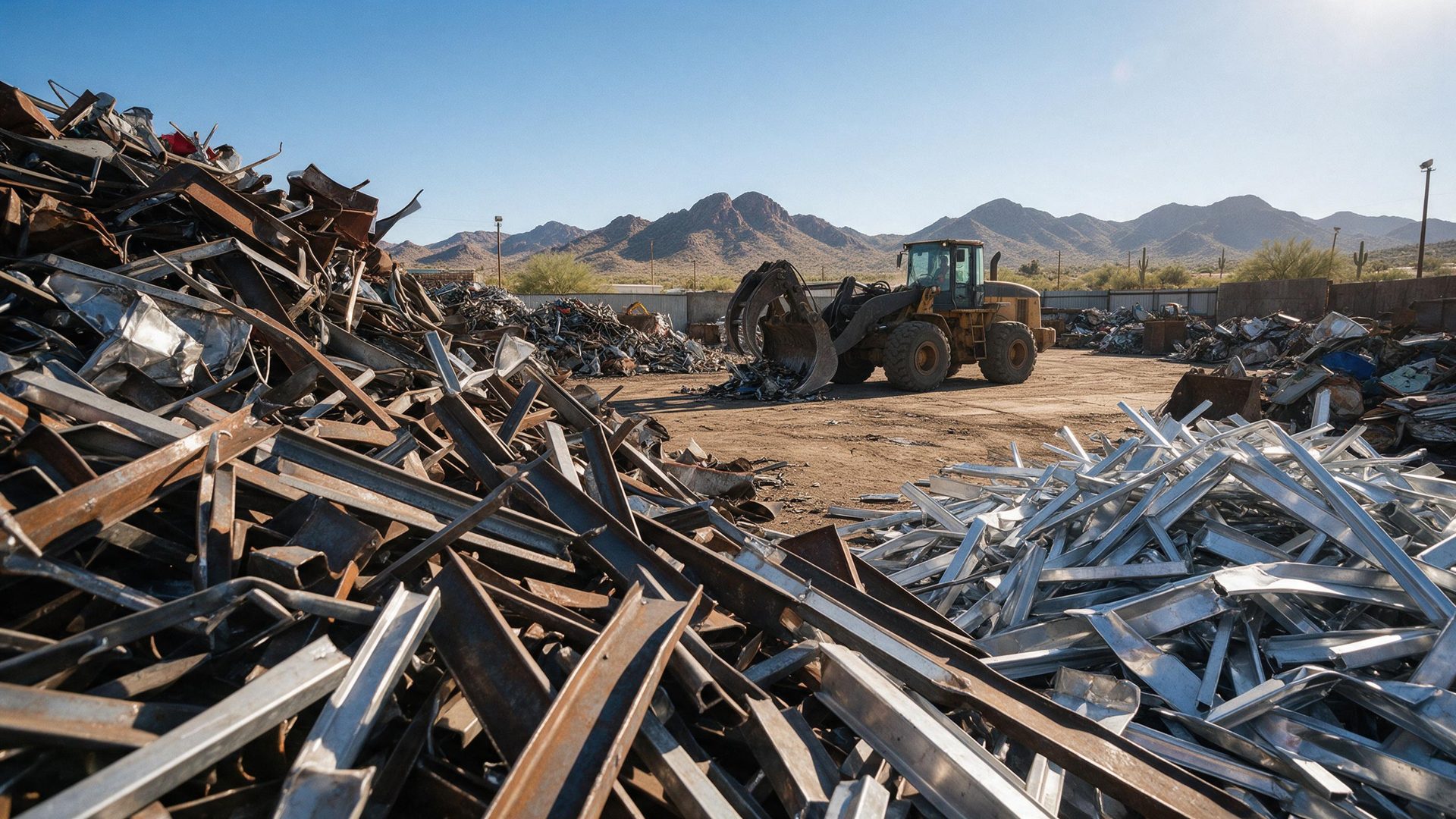
Scottsdale scrap sorting: separate metals before pickup
A magnet is a quick first check, not a complete grade test. Steel and iron usually attract it; copper, brass, and aluminum do not. Some stainless steel may react weakly or not at all. Keep magnetic material in a separate pile, then sort the nonmagnetic pieces by metal. Do not assume a shiny surface means a higher-value grade; coatings, solder, attachments, and contamination can change how a yard classifies a load.
Copper wire is commonly sorted by condition. Bare bright is clean, uncoated copper wire without solder or heavy oxidation. #1 and #2 copper allow different levels of coating, solder, or oxidation, while insulated wire remains covered. Keep wire types separate and send clear photos before cutting insulation off. Stripping takes time and can expose sharp edges; compare the effort with how a partner yard says it will classify the insulated wire.
Brass fittings and aluminum should also be kept apart from steel and copper. Remove obvious nonmetal attachments when that can be done safely, but do not dismantle a component just to make it look cleaner. Dirt, plastic, rubber, and mixed fasteners can turn a clean load into a dirty one. Describe what remains attached and show close photos, so the yard can explain whether additional sorting is worthwhile.
Scottsdale pickup details for cars and larger metal items
Before arranging a junk-car pickup, locate the title and check that the seller name matches the ownership documents. Requirements can depend on the vehicle and situation, so ask the partner yard what paperwork it needs before setting a pickup. If the title is missing, do not assume a bill of sale alone will be enough. Confirm who must be present to sign and whether keys are needed for loading.
Make the vehicle accessible and remove personal belongings before the truck arrives. Tell the yard whether the car rolls, steers, and has its wheels, and disclose parts already removed. Take photos of the whole vehicle and any unusual condition. A car that cannot roll may need different loading equipment, so confirm access, ground clearance, and where the truck can safely stop rather than leaving these details until arrival.
For appliances and vehicle parts, separate the pickup question from the scrap-grade question. Refrigerant-bearing appliances need proper refrigerant evacuation by an appropriately equipped handler; do not cut lines or vent refrigerant. Catalytic converters can require identification and paperwork, and partner yards may ask for proof of ownership. Send photos and ask what documents and handling steps apply before moving either item to a collection spot.
Questions
What should I include in photos when asking about a metal load?
Send one photo showing the whole pile and close views of the main materials, labels, and attached nonmetal parts. Include an object for scale if size is unclear. Mention whether pieces are wet, oily, insulated, or mixed with dirt. Photos help a partner yard assess the material, but the final grade and payment depend on its inspection.
Is insulated copper wire worth stripping before I request a quote?
Not always. Stripping can take substantial time and may create sharp scraps, while the wire may already have a grade as insulated material. Ask the partner yard how it wants the wire presented and whether the amount of insulation affects its assessment. Do not burn insulation; it creates hazardous fumes and can damage the copper.
Can I put aluminum and steel together if they are both clean?
Keep them separate when practical. They are different metals, and mixing them can make sorting harder or affect how a yard evaluates the load. Remove loose steel screws or brackets from aluminum only when safe and easy. If a large item cannot be separated, photograph it and ask the partner yard how it prefers to handle it.
What information should I have ready for a junk-car pickup request?
Have the vehicle location, make and model, whether it rolls or steers, key availability, and title status ready. Mention missing wheels, removed parts, or tight access. The partner yard handles the pickup and confirms its paperwork requirements. Do not leave personal items inside, and ask how it wants the title and signatures handled.
Can an old refrigerator or air conditioner go in a regular scrap pile?
Do not cut refrigerant lines or release the refrigerant. Refrigerant-bearing equipment needs proper evacuation by an appropriately equipped handler before scrap processing. Ask the partner yard whether it accepts the appliance and what condition it must be in. Keep it upright when possible, and do not assume removal of the compressor makes it ready for pickup.