
Gilbert is still building, so the scrap is still fresh
Gilbert’s growth left a lot of three-car garages and a steady supply of copper stubs, HVAC line, and appliance swap-outs. Heritage-district and older agritour pockets are the exception: smaller remodels, not framing piles. Say which street type you are on.
AC condensers fail here on the same schedule as the rest of the East Valley. Set the coil aside. A junk car in a Gilbert HOA driveway usually has a compliance deadline, so put that date in the form if the association already sent a letter.
Local prices vary by yard. Send a photo for a quote. We do not publish a Gilbert scale sheet.
Contractor scrap form · Gold and silver · Cash for cars
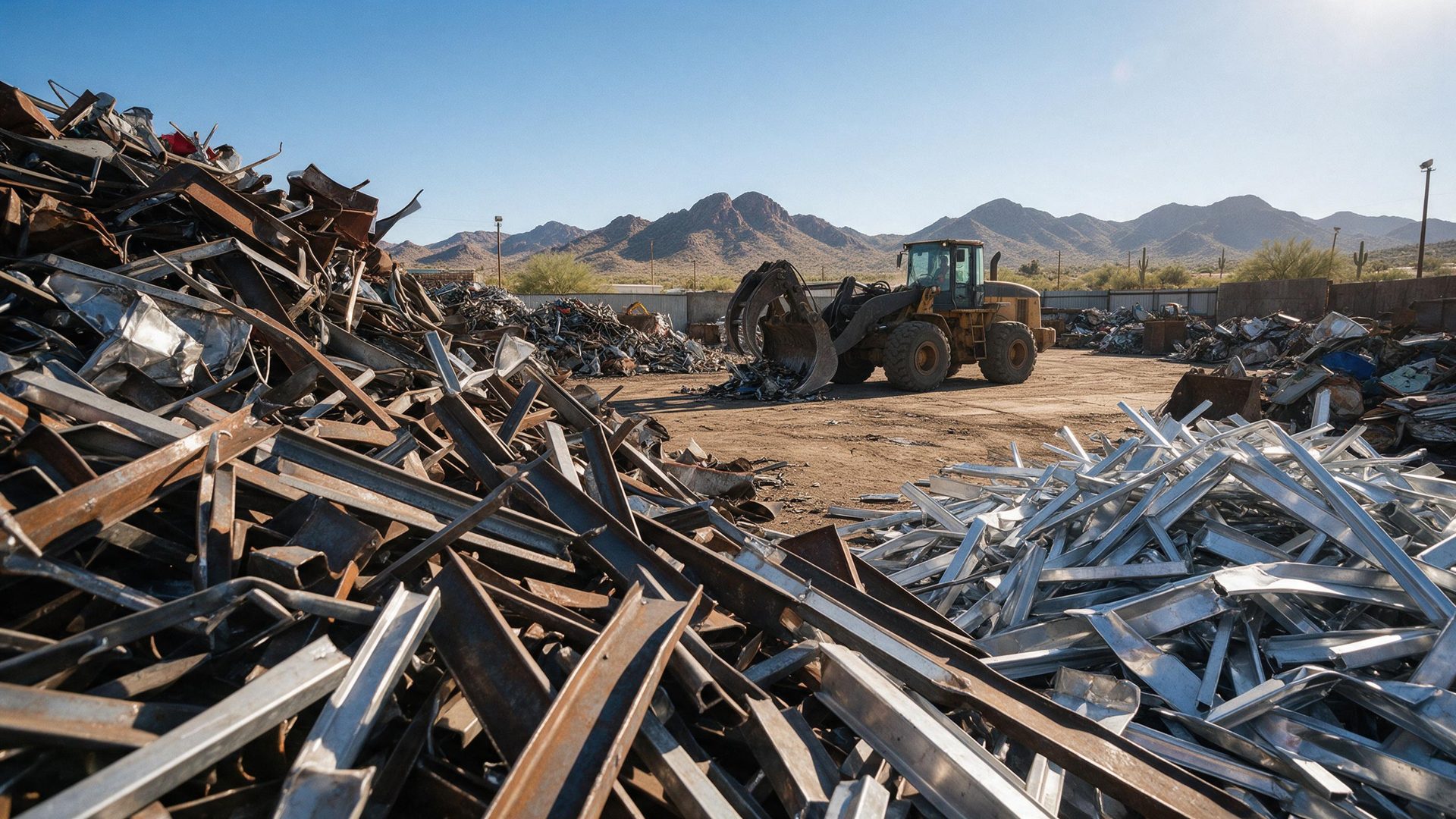
Sorting Gilbert remodel scrap by metal type
A magnet is a quick first check for ferrous metal such as steel and iron. If it sticks, keep that material apart from copper, brass, and aluminum, which are non-ferrous. The test is only a sorting aid: stainless steel can behave differently from ordinary steel, and attached screws or fittings can affect what you see. Keep mixed or uncertain pieces in a separate container.
Copper pipe and wire are not all the same grade. Clean, uncoated copper wire may qualify as bare bright; clean pipe and other solid copper may fit a #1 or #2 category depending on solder, paint, corrosion, and attachments. Insulated wire is usually evaluated separately. Do not assume a shiny surface guarantees a particular grade; the partner yard makes that decision after inspection.
Brass fittings are worth separating from steel and copper, while aluminum can include sheet, cast pieces, siding, and heavier parts that yards may sort differently. Remove obvious non-metal attachments when it is safe, but do not spend time dismantling every item before asking how the yard wants it prepared. Dirt, concrete, plastic, and excess moisture can make a load harder to assess as clean material.
Gilbert household metal, appliances, and pickup preparation
Appliances need a little more care than loose metal. Refrigerators, freezers, and some air conditioners contain refrigerant that must be handled and evacuated properly; do not cut lines or vent a system to make scrap easier to reach. Ask the receiving yard what it accepts and whether it wants the appliance intact. Keep removed cords or loose metal separate, and avoid leaving doors where children can access them.
Before arranging a pickup, gather clear photos, the item’s approximate size, and its location on the property. Mention stairs, gates, low branches, or other access limits, and move loose debris away from the item without blocking a safe path. This site connects sellers with independent partner yards; it does not buy scrap. The yard confirms its own acceptance, weighing, paperwork, and payment process.
For a junk car, ask what ownership documents the yard needs before setting a pickup date. Requirements can depend on the vehicle and circumstances, so do not assume a registration alone is enough. Catalytic converters may require separate identification or paperwork at the yard. Keep keys and available vehicle documents ready, and tell the yard if the car is incomplete or cannot roll.
Questions
How can I tell whether a metal piece is ferrous?
Try a magnet on a clean, exposed area. A strong pull usually indicates iron or steel, while copper, brass, and aluminum are generally non-ferrous. This is not a final grade check: some alloys behave differently, and a small steel fastener can make a mostly non-ferrous item seem magnetic. Separate uncertain pieces and ask the yard how it wants them sorted.
Should I strip insulation from copper wire before requesting a quote?
Not automatically. Bare copper may be graded differently from insulated wire, but stripping takes time and can damage or contaminate the metal if done poorly. Ask the partner yard whether it accepts your wire type and how it evaluates it before doing the work. Never burn insulation off; the fumes are hazardous and the resulting material may be rejected or downgraded.
Can I put an old refrigerator or air conditioner out as scrap?
Check with the receiving yard first. Refrigerant-containing equipment may need proper evacuation before it can be accepted or processed, and rules for handling can vary. Leave sealed lines intact unless a qualified person is handling the refrigerant. Tell the yard what appliance you have and whether it is complete so it can explain its acceptance and pickup requirements.
What should I confirm before a junk car is picked up?
Ask the yard which ownership documents it requires for your situation, whether the vehicle must be accessible, and whether it can collect a car that does not roll. Confirm that personal belongings are removed and that you have the keys if available. If the catalytic converter or other major parts are missing, disclose that when requesting the quote.
Who weighs the metal and pays me?
The independent partner yard handles the scale ticket, final grading, and payment; this site connects your request with a yard and does not purchase the material. Ask the yard how it records weight, what identification or paperwork it needs, and when payment is made. A photo can help start a quote, but the final amount depends on the yard’s inspection and weighing.