
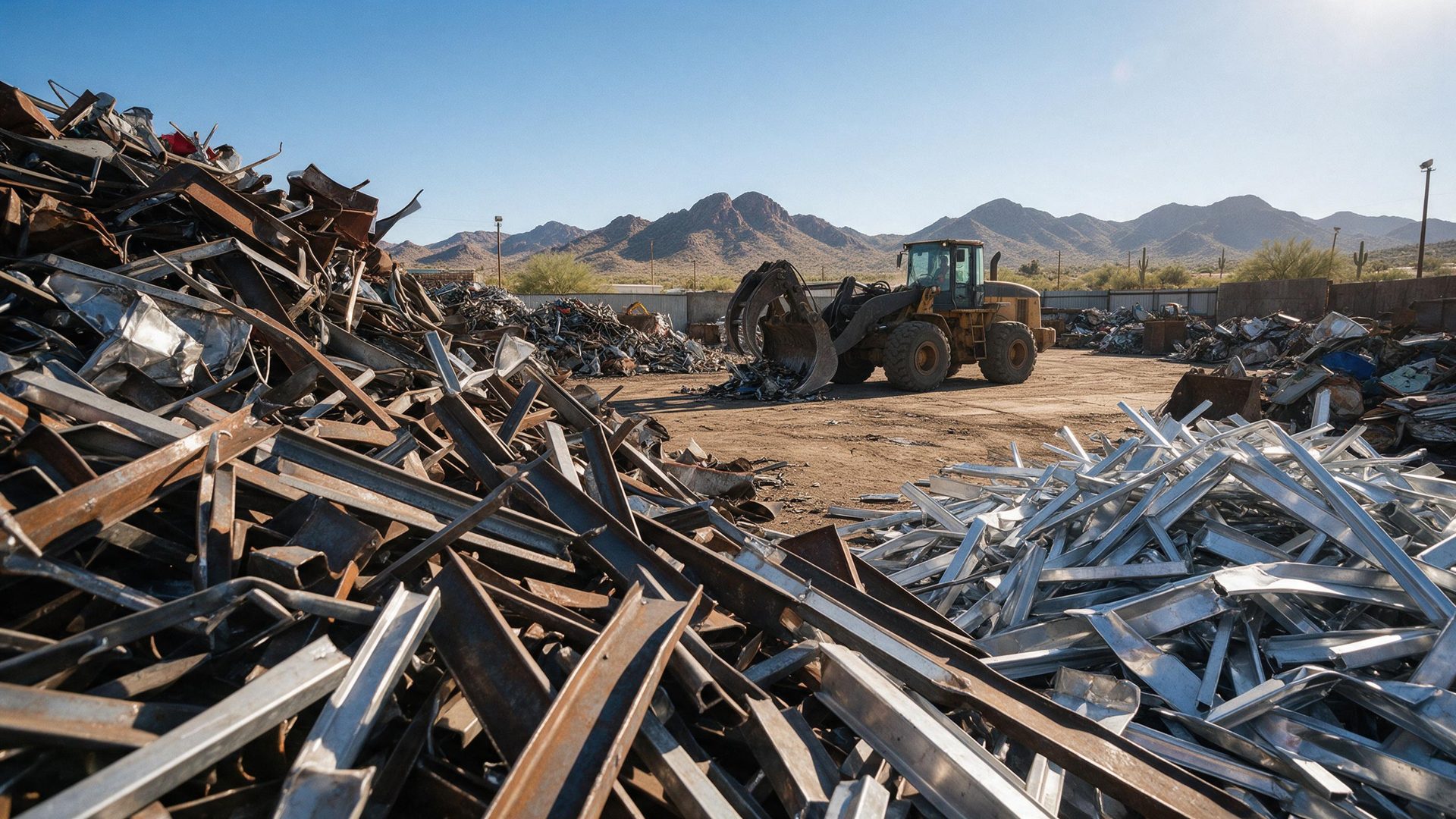
Goodyear’s heavy scrap is in the logistics buildings
Goodyear’s warehouse rows along the west freeways shed racking, dock plates, and light structural steel when a tenant turns. That is the load that justifies a real truck. Photos of upright anchors and aisle width matter more than a weight guess.
The housing side is new. Copper cutoffs and condensers, plus a junk car on a lot that used to be a field. Clay dust after a monsoon makes every pile look worse than it is — shoot the photo on a dry morning if you can.
Local prices vary by yard. Send a photo for a quote. We do not publish a Goodyear scale sheet.
Contractor scrap form · Gold and silver · Cash for cars
Sorting Goodyear scrap by metal type
Before loading material from a warehouse or a home project, separate steel and iron from non-ferrous metals such as copper, brass, and aluminum. Mixed piles can take longer to assess, and attachments may affect how a yard grades a load. Send clear photos of the separate groups when requesting a quote; a photo is for an estimate, not a final scale grade.
A magnet is a quick sorting aid. If it sticks firmly, the piece is likely ferrous, though coatings and attached parts can complicate the result. Copper, brass, and most aluminum do not attract a magnet. Test a clean area when possible, and do not rely on the magnet alone to identify an alloy or predict what a yard will pay.
Copper condition matters. Bare bright wire is clean, uncoated copper wire; #1 and #2 copper have different allowable levels of oxidation, solder, coatings, or attachments, as defined by the yard. Insulated wire is usually evaluated separately. Keep brass valves and fittings apart from copper, and separate aluminum sheet, extrusions, and cast pieces if you can identify them.
Clean, sorted metal is easier for a yard to assess than material mixed with wood, concrete, plastic, or insulation. Remove obvious nonmetal where it is safe and practical, but do not spend time dismantling an item without asking whether the yard wants it intact. For example, an attached steel fitting can change the grade of a copper piece.
Stripping insulated wire takes time and can create sharp scraps. Compare the effort with the yard’s current grading rules before stripping; yards commonly grade insulated wire by type and condition, and the recovered copper may not make the extra labor worthwhile. Never burn insulation to recover metal. It creates hazardous smoke and can leave contaminated material that is harder to handle.
Preparing a Goodyear scrap pickup safely
For a pickup request, have the material type, approximate quantity, and photos ready. Show the full pile and a close view of representative pieces, including any attachments or contamination. Keep access clear enough for the agreed vehicle and loading method. A partner yard can explain its pickup limits and whether the material needs to be separated or staged before arrival.
Do not cut refrigerant lines on an air conditioners, refrigerators, or other sealed cooling equipment. Refrigerant needs proper evacuation with suitable equipment before the unit is dismantled or accepted as scrap. Ask the yard what it accepts and what preparation is required. Keep appliances intact until you have instructions, since requirements can differ by facility.
Wear gloves, eye protection, and sturdy footwear when handling scrap. Sheet edges, wire ends, and broken castings can cut or puncture. Do not climb unstable stacks or reach into machinery, and keep children away from loading areas. This site connects sellers with independent partner yards; the yard confirms acceptance, weighing, and payment, and handles any required identification or paperwork.
Questions
Should I remove steel attachments from copper or aluminum?
Ask the yard how it grades that material before cutting or prying parts off. Removing an attachment may improve sorting, but it can also damage the metal or create a safety risk. If the piece is heavy, sharp, or under tension, leave it intact and send a photo for guidance.
Can I sell a catalytic converter by itself?
Acceptance and documentation rules vary by yard. Contact the partner yard before removing or transporting a converter, and ask what proof of ownership and identification it requires. Do not assume a loose converter will be accepted or that a photo establishes ownership. The yard sets its own intake and paperwork requirements.
What paperwork should I have for a junk car?
Many yards ask for a title or other proof of ownership, and requirements can depend on the vehicle and the yard. Ask what documents are needed before arranging pickup, including whether the title must be in a particular name and whether identification is required. The partner yard handles the transaction and confirms its requirements.
Do I need to drain fluids before a car is picked up?
Do not drain oil, coolant, fuel, or other fluids onto the ground or into a drain. Ask the yard whether it wants the vehicle intact and what preparation is appropriate. Fluid removal and transport can create spills and hazards, so leave that work to people equipped to handle it unless the yard gives specific instructions.
How can I help avoid a pickup delay?
Confirm the pickup window, vehicle access, and loading plan with the yard in advance. Move loose items out of the way, keep people clear of the loading area, and gather the requested vehicle documents. Mention blocked access, non-running condition, or attached equipment when requesting the quote so the yard can assess the arrangement.