
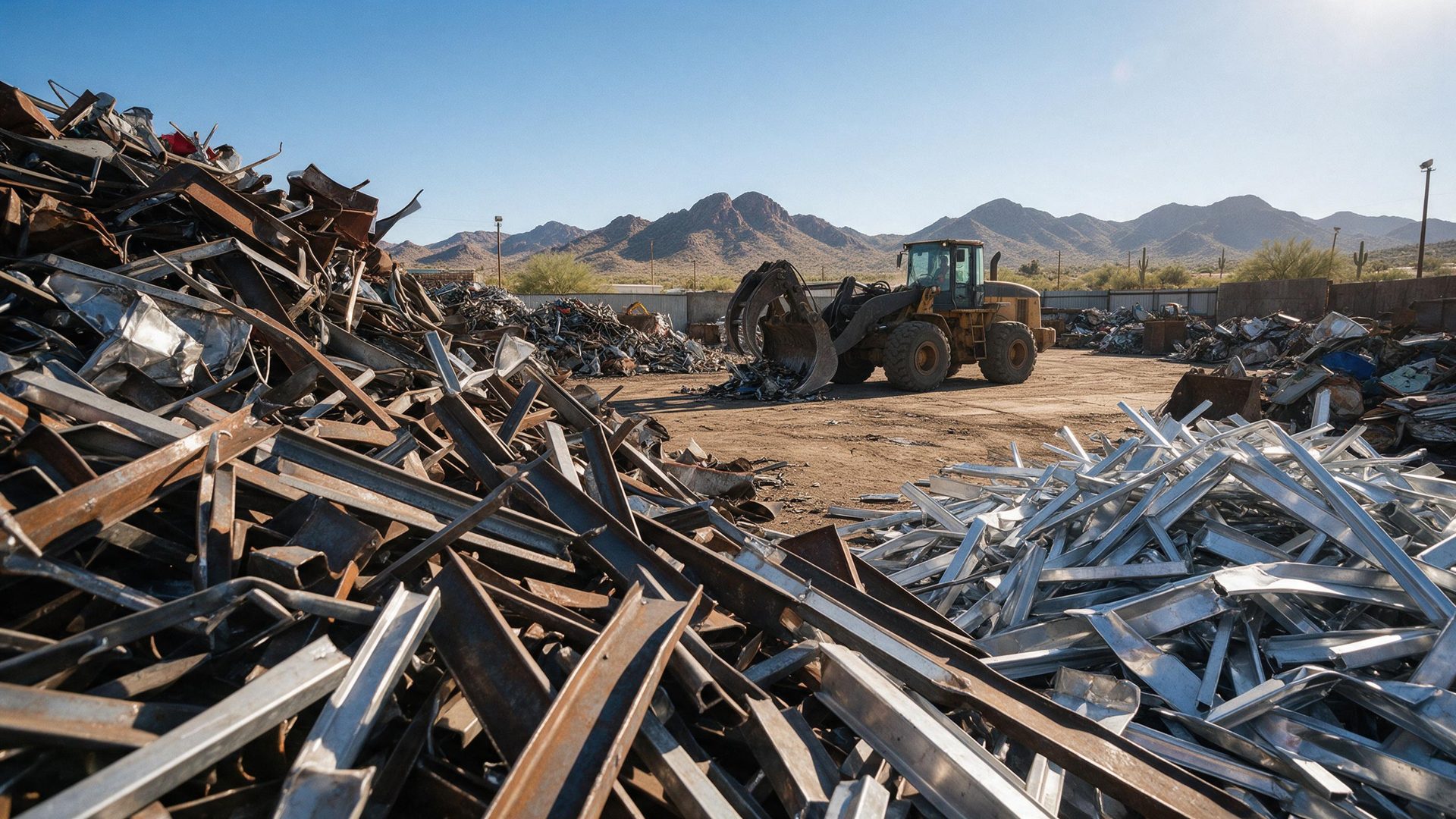
Queen Creek piles are often in a shop, not a courtyard
Queen Creek lots were planned with room, and the scrap matches: a hobby shop with steel offcuts, a horse-property gate, an AC condenser behind a block wall, and builder leftovers from the newest phase. It is rarely a high-rise demo.
Distance from central Phoenix is the constraint. Photograph the volume. A single water heater is a different conversation from a trailer of shop steel and a truck that has sat since the well pump was replaced.
Local prices vary by yard. Send a photo for a quote. We do not publish a Queen Creek scale sheet.
Contractor scrap form · Gold and silver · Cash for cars
Sorting Queen Creek shop scrap by material
For a mixed shop pile, start by separating steel and iron from copper, brass, and aluminum. A magnet is a quick first check: it usually sticks to ferrous metals such as steel and iron, but not to common non-ferrous metals. It is only a rough sorting tool. Some items combine several materials, so keep uncertain pieces apart rather than guessing at their grade.
Copper is commonly sorted by condition. Bare bright is clean, uncoated copper wire with no insulation; #1 and #2 copper have different levels of cleanliness or attached material, and insulated wire is graded separately. Brass valves and fittings should be kept apart from copper. Do not assume painted, soldered, or attached pieces qualify as the cleanest grade. A photo can help a partner yard assess the load, but the yard determines the grade.
Aluminum also comes in different forms, including sheet, cast pieces, and extrusions. Keep it separate from steel and avoid mixing it with plastic, wood, or other debris. Dirt, insulation, screws, and attached fittings can affect how a yard evaluates material. On a larger Queen Creek shop cleanout, a few labeled piles are easier to photograph and review than one mixed heap. Ask the partner yard how it wants unusual or coated material sorted.
Queen Creek appliances, vehicles, and pickup planning
Air conditioners, refrigerators, and other cooling appliances may contain refrigerant. Do not cut refrigerant lines or release the gas yourself. Refrigerant needs proper recovery by someone equipped to handle it before the unit is processed as scrap. Ask the partner yard what it accepts and what preparation it requires; a photo of the whole appliance and its identifying label can help clarify the next step.
Catalytic converters are not ordinary mixed scrap. Keep a converter attached to its vehicle until removal and paperwork requirements are clear, and ask the partner yard what identification or proof of ownership it requires. Scrap vehicle rules and documentation can depend on the item and yard. For a junk car, have the title or other ownership documents available and confirm the yard’s requirements before arranging pickup.
Before a pickup, send clear photos of the full load, access route, and any large or awkward items. Note whether the vehicle can roll and whether equipment is needed to reach the pile. Keep children and pets away, wear gloves and sturdy footwear, and do not climb unstable stacks or handle sharp wire ends. This site connects sellers with independent partner yards; the yard handles weighing, payment, and any required ID checks.
Questions
Does a magnet tell me exactly what grade my scrap is?
No. A magnet can help distinguish many ferrous metals from non-ferrous metals, but it does not identify a precise grade or reveal every material inside an item. Keep questionable pieces separate and send photos for an initial review. The partner yard makes the final grade decision when it inspects the material.
Is it worth stripping insulation off copper wire?
It depends on the wire type, the amount, and the time and tools involved. Stripping can expose clean copper, but it also creates labor and sharp offcuts. Some wire is better sold insulated. Ask the partner yard how it evaluates your wire before spending time stripping it, and never burn insulation off.
Can I put an old air conditioner in a scrap pile?
Keep it separate from ordinary metal until you know its refrigerant has been properly recovered. Do not cut lines or vent refrigerant. Many yards have specific acceptance steps for cooling appliances, so ask before loading or arranging pickup. A photo showing the unit and its label can help the yard advise you.
What paperwork should I have for a junk car?
Have the vehicle title or available ownership documents ready, then confirm the partner yard’s requirements before pickup. Do not assume a vehicle can be accepted without paperwork. The yard handles identification and payment procedures, and requirements may differ by vehicle and yard. Share basic vehicle details and photos when requesting a quote.
What should I clear before a scrap pickup?
Make the material and access path visible, and move loose items that could block safe loading. Keep people and pets clear of the work area. Tell the yard about gates, tight turns, non-running vehicles, or heavy pieces in advance. Confirm what equipment and access the pickup needs before setting a time.